Phone: (408) 782-1371
There is a reason experienced installers spend so much time talking before they ever start working. The equipment matters, of course, but it is only one part of the picture. The questions asked at the beginning often have a bigger impact than the tools used later. Where will the system operate? What obstacles already exist? How will the weather affect overall performance? Is the network expected to stay the same for the next five years, or will it need to grow? Those answers shape almost every decision that follows. Looking at a satellite or Microwave project this way changes your perspective. You stop seeing it as an installation and start seeing it as a process. That is exactly what satellite network design implementation is meant to accomplish. It creates a path that makes sense before anyone climbs a ladder or opens a toolbox.
It is tempting to think a site survey is simply checking where an antenna will sit. It rarely works out that neatly. We have seen locations that looked perfect on paper until a nearby structure blocked part of the signal path affecting the link budget or the Fresnel zone (for microwave links), or where the available power source turned out to be much farther away than expected. Even cable routes can surprise you once you are standing in the space. There is something about physically walking a site that reveals details no drawing ever seems to capture. Those little discoveries are valuable because they happen before they become expensive problems.
Some projects only need dependable connectivity for everyday business operations. Others support emergency communications where downtime is not really an option. Treating those two situations the same would make little sense. This is why we spend time understanding how the network will actually be used instead of immediately focusing on hardware. The equipment should fit the job, not the other way around. It sounds obvious, yet it is a step that gets overlooked more often than people think.
Preparation does not usually get much attention because there is not much to photograph. Still, it is one of the busiest parts of the project. Before installation starts, we work through a practical checklist that keeps the job moving once equipment begins arriving:
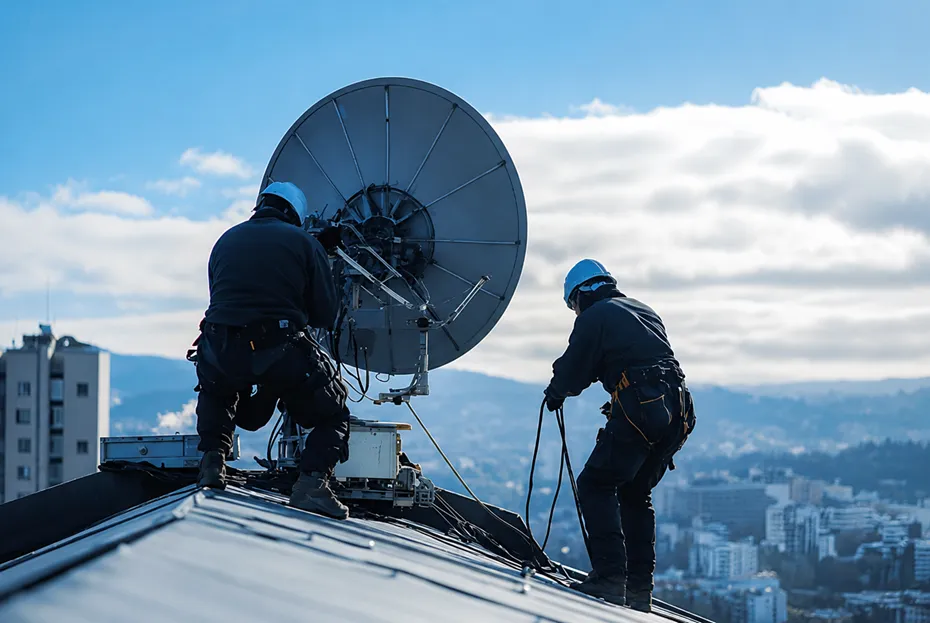
Installation is where patience earns its keep. Most components go together exactly as planned, but there are always small adjustments that only become obvious once work is underway. A connector may need extra protection from the weather. A cable route might need to change slightly to avoid unnecessary strain. None of these things feel dramatic while they are happening, yet they often separate an average installation from one that stays reliable for years. There is no shortcut for careful workmanship. We have never found one.
Once the hardware is installed, the job is far from over. This is usually the stage where patience matters most because getting a satellite system to perform consistently often comes down to careful adjustments rather than big changes. We align the antenna(s), check every communication path, fine-tune the network settings, and then check everything again. It can take a little back and forth before the numbers look right, and that is completely normal. This is where satellite network design implementation starts to feel real. The drawings and planning have done their job, but now there is a working network in front of you, responding the way it should and ready for everyday use.
No installation should be considered complete simply because everything powers on. That is a low bar. We test the network under real operating conditions, checking signal quality, throughput, latency, and overall stability. Backup communication paths are verified if they are part of the design. Even go through a mock “Cut-over” scenario if we have the ability to do so. Occasionally, testing uncovers something that needs a small adjustment. Honestly, that is not a bad outcome. Finding an issue before the system is handed over is far better than hearing about it after the first important communication fails.
A satellite (microwave) network is not something you install once and never think about again. Things change. Weather takes its toll, equipment gets older, a new obstacle is built in your line-of-site, and sometimes the way a business operates changes, too. We have seen systems run smoothly for years simply because someone caught a small issue before it turned into a much bigger one. That is usually how good maintenance works. It is not about fixing major failures every few months. It is about noticing the little things early. Working with an experienced satellite system installation company also gives you the advantage of having a team that already knows how your network was put together, which can save a surprising amount of time when questions or upgrades come up later.
At Agile Communication Systems, we know that a successful satellite project is not defined by installation day alone. Most of the work that makes a system dependable happens well before anyone switches it on. Taking the time to understand the site, asking the right questions, checking the small details twice, those are the things that usually make the difference months and even years later. Every project has its own challenges, and honestly, that is part of the job. If you are thinking about a new satellite communications system or planning to upgrade an existing one, we would be happy to talk through your goals and help you find an approach that makes sense for the way you actually operate. Get in touch with our team whenever you are ready to start the conversation.
A site survey helps identify signal obstacles, power availability, and the best equipment locations before installation begins. It reduces the chances of costly adjustments later.
The timeline depends on the size and complexity of the system. Smaller installations may take a day or up to a few days, while larger projects can require additional planning and testing.
Testing confirms that every component is working correctly under real operating conditions. It also helps identify small issues before the system is put into regular use.
In many cases, yes. A professional assessment can determine whether your current equipment can support upgrades or if certain components should be replaced.
Regular inspections are recommended to check equipment condition, verify performance, and address minor issues before they affect network reliability. We offer on-going support to inspect and verify systems are functioning at peak performance.